Mein Name ist Matti Hajek, ich gehe in die 10. Klasse des Geschwister Scholl Gymnasiums in Stuttgart und habe mein BOGY Praktikum beim SFB-TRR 161 an der Universität Konstanz absolviert.
Eine Woche als BOGY Praktikant in Konstanz
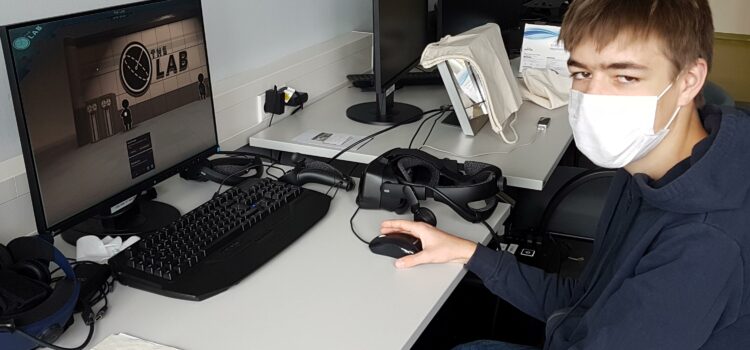

Mein Name ist Matti Hajek, ich gehe in die 10. Klasse des Geschwister Scholl Gymnasiums in Stuttgart und habe mein BOGY Praktikum beim SFB-TRR 161 an der Universität Konstanz absolviert.
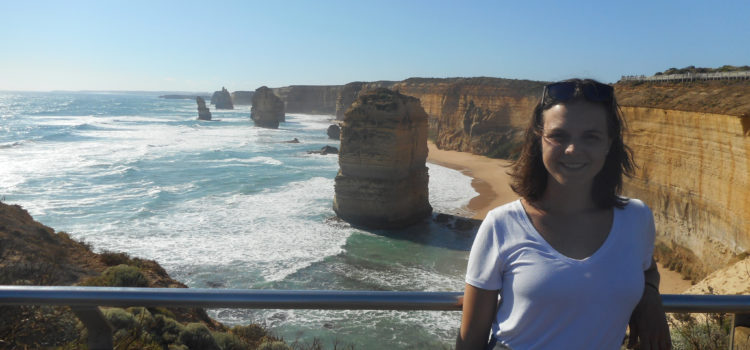
I am a PhD student in the Life Science Informatics Group of Prof. Dr. Falk Schreiber at the University of Konstanz and visited the Immersive Analytics Lab at Monash University (Melbourne, Vic, Australia).
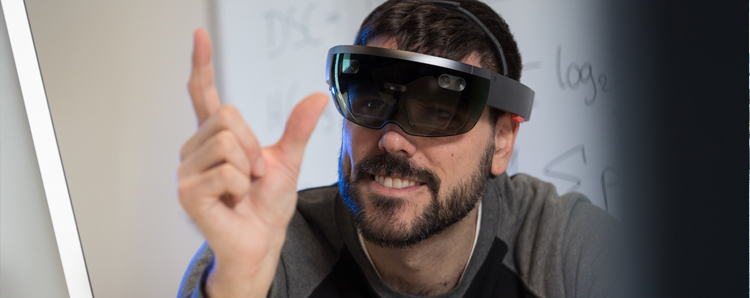
Since August 2018, Michael Sedlmair is a researcher at the Visualization Research Center at the University of Stuttgart. As Assistant Professor his work focuses on the development of Augmented Reality (AR) and Virtual Reality (VR) solutions, Data Visualization, and Human-Computer Interaction (HCI). In an interview he answered some questions regarding his current and future research activities and his idea of how our future might look like.
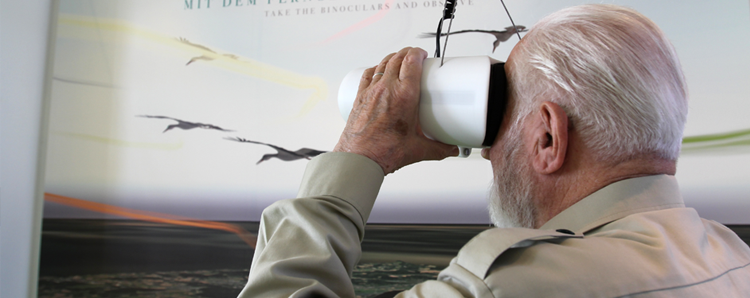
Mit Hilfe von VR-Ferngläsern ist das zur Zeit auf der Konstanzer Insel Mainau in der Ausstellung „Vom Bodensee nach Afrika – mit ICARUS auf Langstrecke“ möglich! An verschiedenen Stationen kann man hier die Entwicklungen in der Tierbeobachtung nachvollziehen und sich interaktiv über aktuelle Forschungsergebnisse informieren.
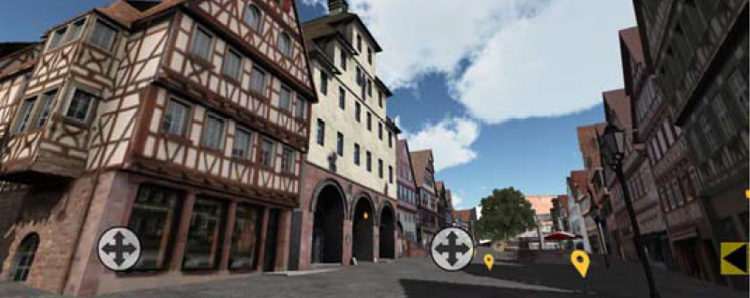
The International Society on Virtual Systems and MultiMedia (VSMM) held its 23rd International Conference in Dublin/Ireland and Belfast/Northern Ireland, on October 30th to November 5th, 2017. In total, about 150 participants enjoyed an exciting program, consisting of Workshops and Conference tracks in Dublin, and Special Workshops and Cultural Tours in Belfast. The VSMM Society launched its conferences 23 years ago in Japan, in the early stages of Virtual Reality applications. Since then, it brings together leading researchers in the application of digital media, mobile, and virtual and augmented reality technology together with users across a diverse community.

In summer, I was at Facebook/Oculus in Redmond (USA). My internship was in the perceptual science group at Oculus Research. My work was closely related to my thesis topic as well as to my work in the SFB-TRR 161 at the Institute for Visualization and Interactive Systems, University of Stuttgart (Germany). I was responsible for the development of a study design, the experimental apparatus, and conducting a user study in virtual reality to investigate the effect of virtual hands on tactile perception.
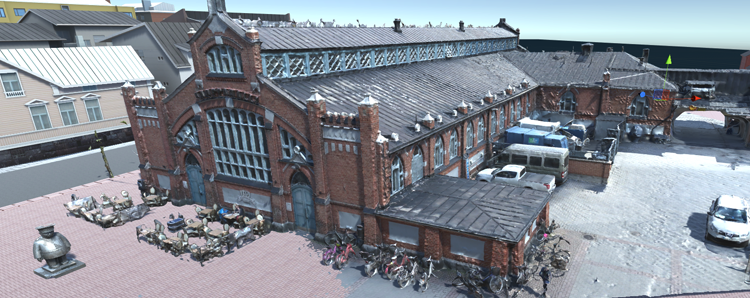
From June 12nd-17th, the 8th International UBI Summer School (UBISS) 2017 took place at the University of Oulu, Finland. The summer school comprised four parallel 6-day workshops. Prof. Norbert Haala and me from the University of Stuttgart visited Oulu as instructors of one of the four workshops – Virtual City Models.
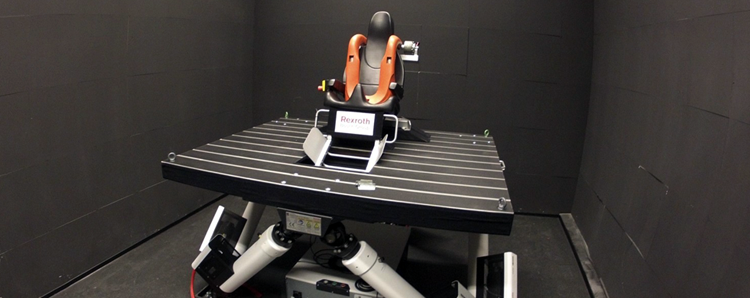
Within the research group Cognition & Control in Human-Machine Systems at Max Planck Institute for Biological Cybernetics in Tübingen, we want to study fundamental principles of human perception, and translate them to a variety of applied fields, including the design of virtual environment. One of our research interests, and topic of today’s blog post, is the perception of self-motion.
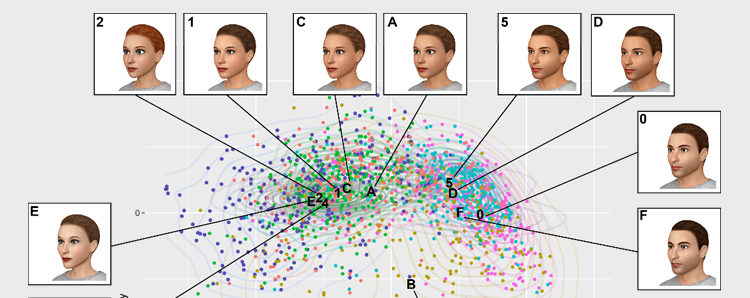
With increasing realism of computer graphics and virtual worlds and digital characters look more and more natural. However, the effect of Uncanny Valley, first described in 1970, prevents too realistic human characters from being accepted. In my Ph.D. thesis, I investigate how the Uncanny Valley affects the user experience in virtual environments and virtual reality and how the effect can be avoided.
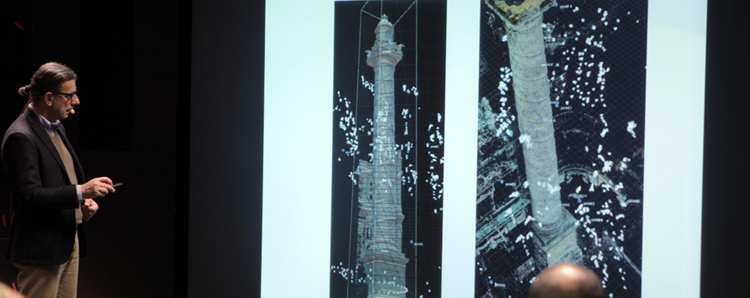
At the end of last month, Michael Klein from 7reasons, Vienna, visited the Visualization Research Center of the University of Stuttgart (VISUS). Within the Lecture Series “Visual Computing“ carried out by the Universities of Stuttgart and Konstanz within the research project SFB-TRR 161, he gave an enlightening talk about the application of computer graphics for cultural heritage preservations.
