
Exploring depth perception through collaborative research
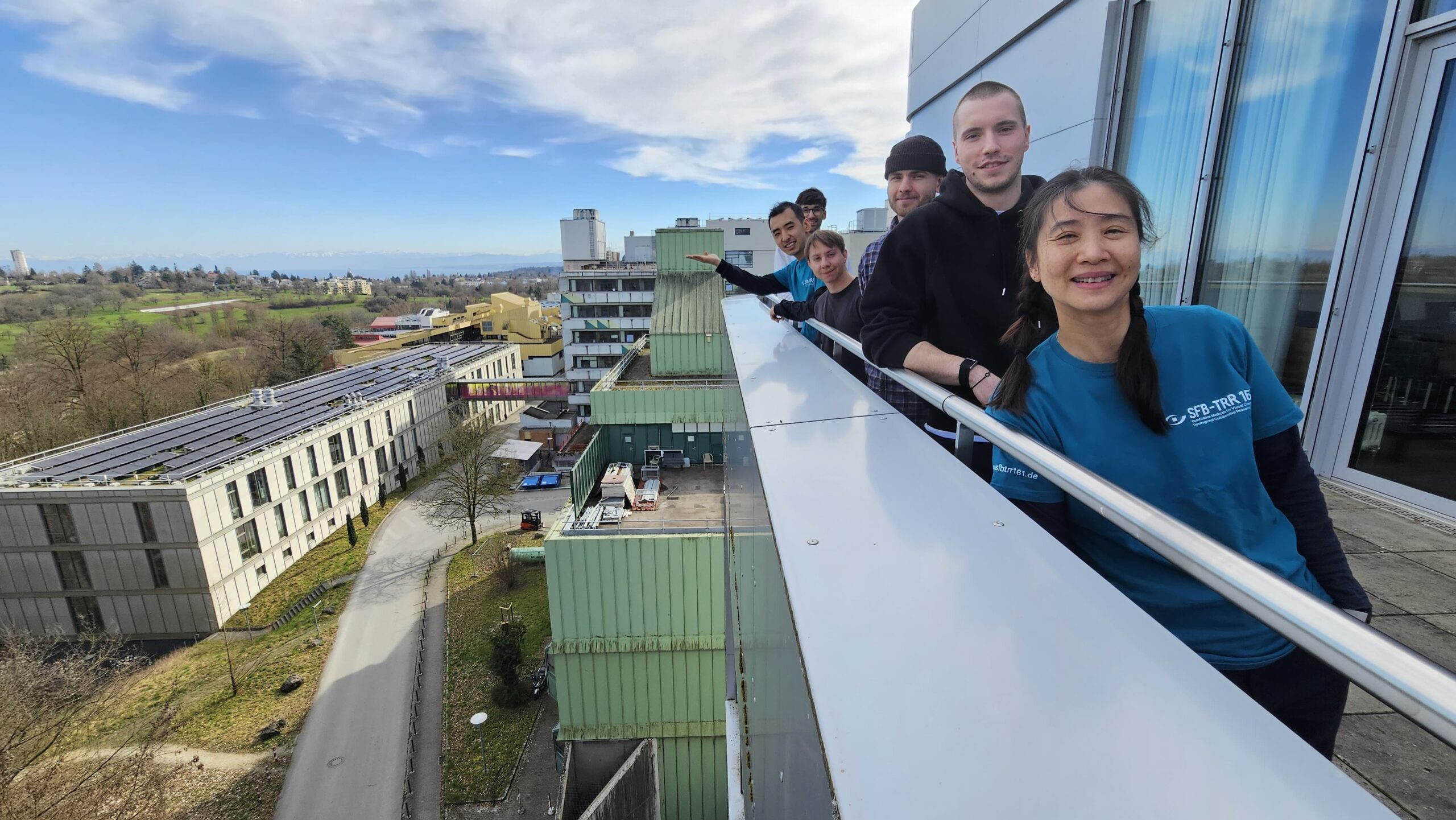
The latest SFB-TRR 161 hackathon, held on March 12th and 13th, 2026 at the University of Konstanz, brought together participants to develop and refine research ideas in a focused, collaborative setting. In preparation for the event, SFB members submitted four project proposals. After a voting process, participants selected one project to work on during the hackathon: a project focused on graph perception in VR with depth cue. The selected project started from the broad question of how we can investigate, measure, and better understand depth perception through different methodological approaches. During the initial brainstorming session, participants identified several possible ways to address this topic.
From research question to team projects
During the device setup stage, we chose to temporarily split into two groups: One group concentrated on configuring the devices, while the other investigated how the gathered data could be used for subsequent analyses to gain deeper insights into graph perception in VR.
One team focused on conducting a post hoc analysis of the existing dataset. Their central question was: What factors shape how people perceive the complexity of graphs in virtual environments, especially when depth cues are missing in previously collected WebXR data? To address this, they explored how graph readability affects user experience in VR, examined the existing dataset, discussed potential analytical methods, and considered related issues.
Over the course of the hackathon, the team built a prototype of their analysis approach, applied it to the dataset, and interpreted the resulting findings. By the end of the event, they had established a complete data analysis pipeline for the collected data.
The second team explored how eye tracking can be used to evaluate the impact of depth cues on graph readability in virtual environments. Their work centered on assessing the feasibility of analyzing depth perception in our VR context, determining which data can or should be recorded for different VR systems and configurations, and examining how that data should be computed and interpreted. The team approached this through literature review, proof-of-concept implementations, and initial pilot tests, with a particular focus on designing the experimental setup and defining accuracy metrics.
Because of time limitations, the team did not reach the final testing stage. They do, however, intend to continue this work and integrate it into an upcoming study project.
Collaborative process
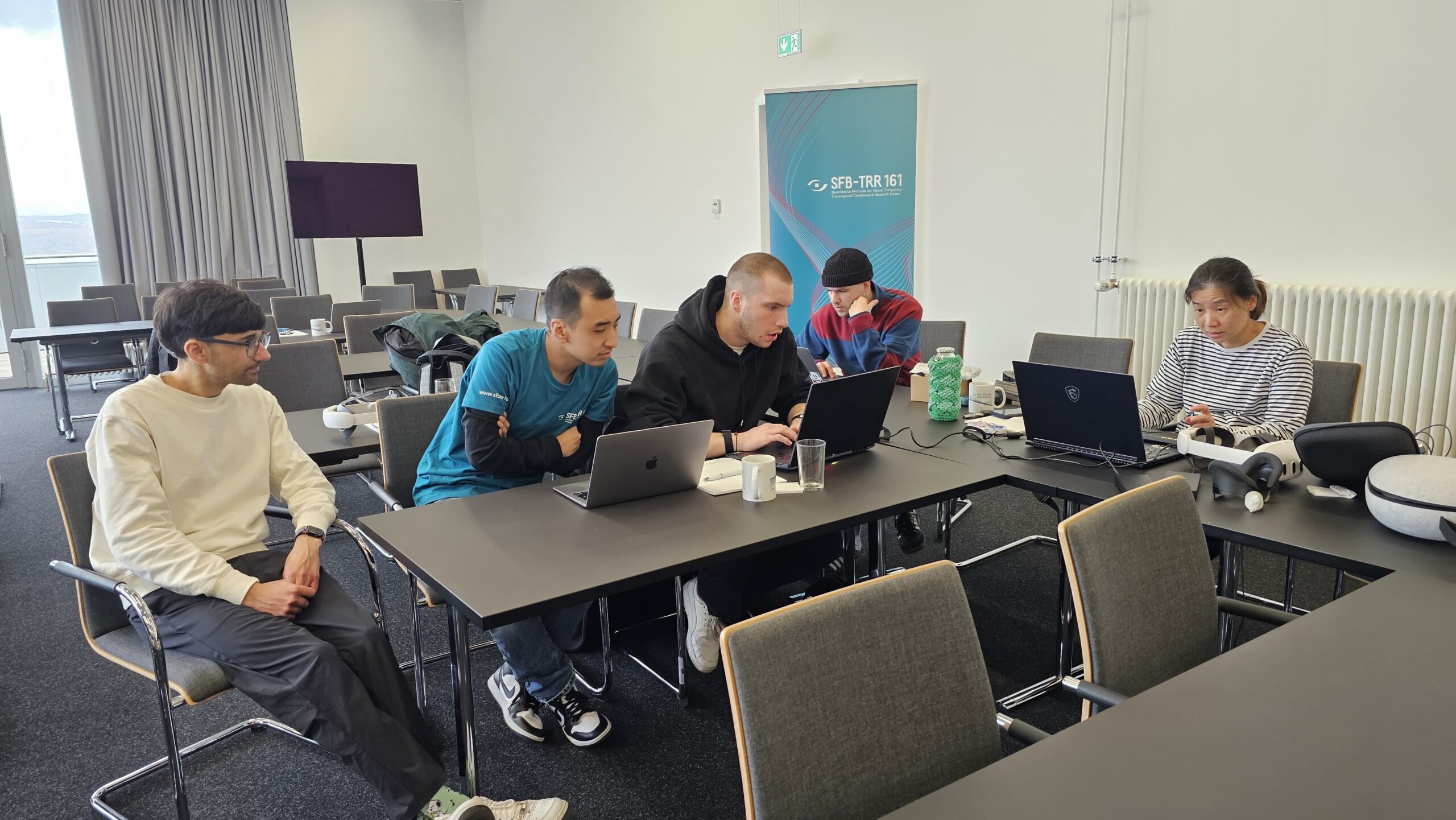
A central feature of the hackathon was the way participants moved collectively from several initial ideas to a shared research focus. The selection of one project allowed the group to concentrate their efforts, while the division into two teams made it possible to explore complementary approaches to the topic of depth perception. Throughout the hackathon, participants exchanged ideas, discussed methodological challenges, and provided feedback across teams. This format created space for both focused hands-on work and broader reflection on how the different strands of the project could connect to each other.
Outcomes of our research hackathon and next steps
The hackathon produced two complementary lines of work on depth perception. While the projects are still at an early stage, they provide a promising basis for future research. Possible next steps include refining the research questions, developing the methodological design further, preparing materials or datasets, and discussing whether the results could lead to a publication. At this stage, potential publication plans include both teams. The hackathon helped clarify which aspects of the topic could be developed into a future paper, project proposal, or collaborative study.
Conclusion
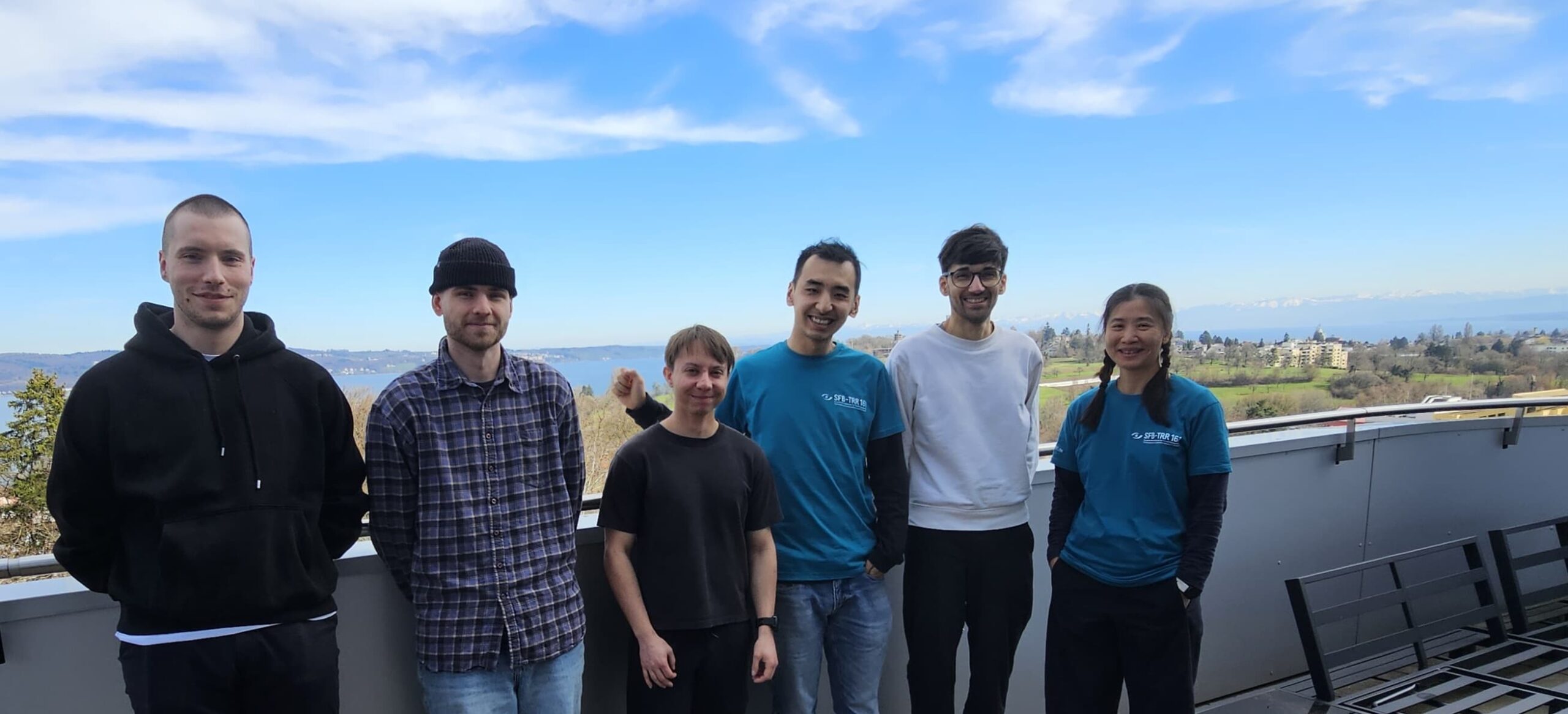
After our previous events in 2024 and 2025, the hackathon once again proved itself as a productive opportunity to turn initial proposals into a focused collaborative research project. By concentrating on depth perception and exploring the topic through two complementary approaches, participants were able to develop concrete ideas, identify methodological challenges, and outline possible directions for future research.
