
Between February and April 2026, I spent two months at the Università degli Studi di Perugia in the research group of Giuseppe ‘Beppe’ Liotta. Some of Prof. Liotta’s group’s focuses are graph drawing, data visualisation, and digital technologies for cultural heritage, making it an ideal environment for interdisciplinary research in my field, which is the intersection between computer science and archaeology. The stay was built upon an already existing collaboration and emerged from shared interests in immersive technologies, and, in my case, digital archaeology.
During my stay, I collaborated closely with Prof. Liotta’s team at the CeDiPa on the development of a VR-AI avatar for virtual archaeology, designed to provide contextual information about monuments and archaeological finds in immersive virtual environments. Depending on its configuration, the avatar can tailor its explanations to different audiences and use cases, ranging from museum visitors and educational settings to researchers and domain experts.
In parallel to working on the VR-AI avatar, I was part of a team that digitally documented the Temple of Clitunno, a UNESCO-associated early medieval monument located in Umbria. The digitisation process combined photogrammetry, laser scanning, and digital modelling workflows in order to create highly detailed digital representations of the site. We are currently extending the AI avatar framework to this monument. The goal is to provide visitors with an interactive way to explore the monument’s historical and cultural significance.
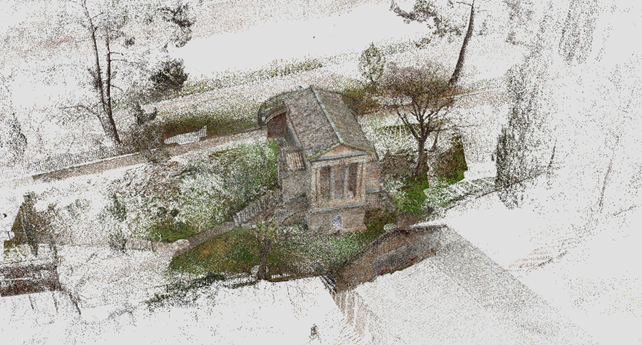
While in Perugia, I greatly benefited from the expertise and interdisciplinary environment provided by my hosts. At the same time, I was able to contribute practical knowledge regarding the use of specialised equipment such as the FARO Focus as well as workflows for photogrammetric data acquisition and processing. This exchange of technical expertise became a crucial aspect of the collaboration, strengthening the connection between the participating institutions.
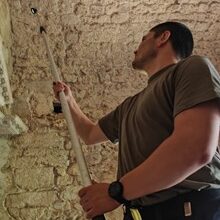
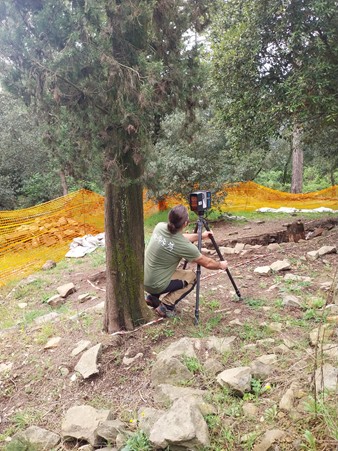
Another highlight of my stay was the opportunity to participate in a data collection campaign at a newly excavated archaeological site near Panicale, Italy. The opportunity arose through conversations with archaeologist Andrea Polcaro, who is leading the excavation activities in the region. Participating in fieldwork at an active excavation site provided valuable insight into archaeological documentation processes and offered a unique perspective on how digital technologies can support ongoing archaeological research from the early stages of the excavation process.
Beyond the individual research projects, the stay in Perugia significantly strengthened and expanded the collaboration between our institutions. Our complementary skills in digital heritage and AI systems proved to be an excellent fit for future joint research initiatives. Several follow-up projects and continued collaborations are already being planned, particularly in the areas of immersive cultural heritage experiences and AI-supported archaeological knowledge systems.
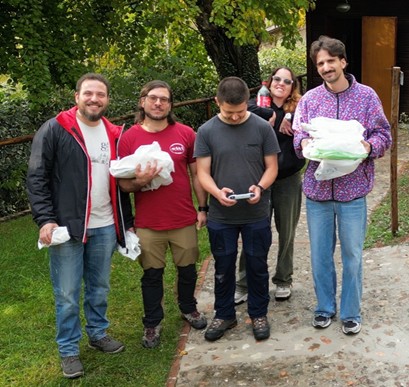
Finally, I would like to sincerely thank Prof. Giuseppe Liotta, the entire CeDiPa team, and all colleagues in Perugia for their warm welcome, inspiring discussions, and continued support throughout my stay. I am also grateful to Prof. Dr Falk Schreiber and all of my other dear colleagues in Konstanz, who made this collaboration possible, and I look forward to continuing our joint work in the future.
